
Change Management Consulting That Delivers Results

Organizations don’t resist change because people are difficult. They resist it because the change was announced, not managed. We make sure your people understand it, believe in it, and know exactly what it means for them.
Great Plans Die When People Don't Move With Them

Our Change Management Consulting Services
Change readiness assessment
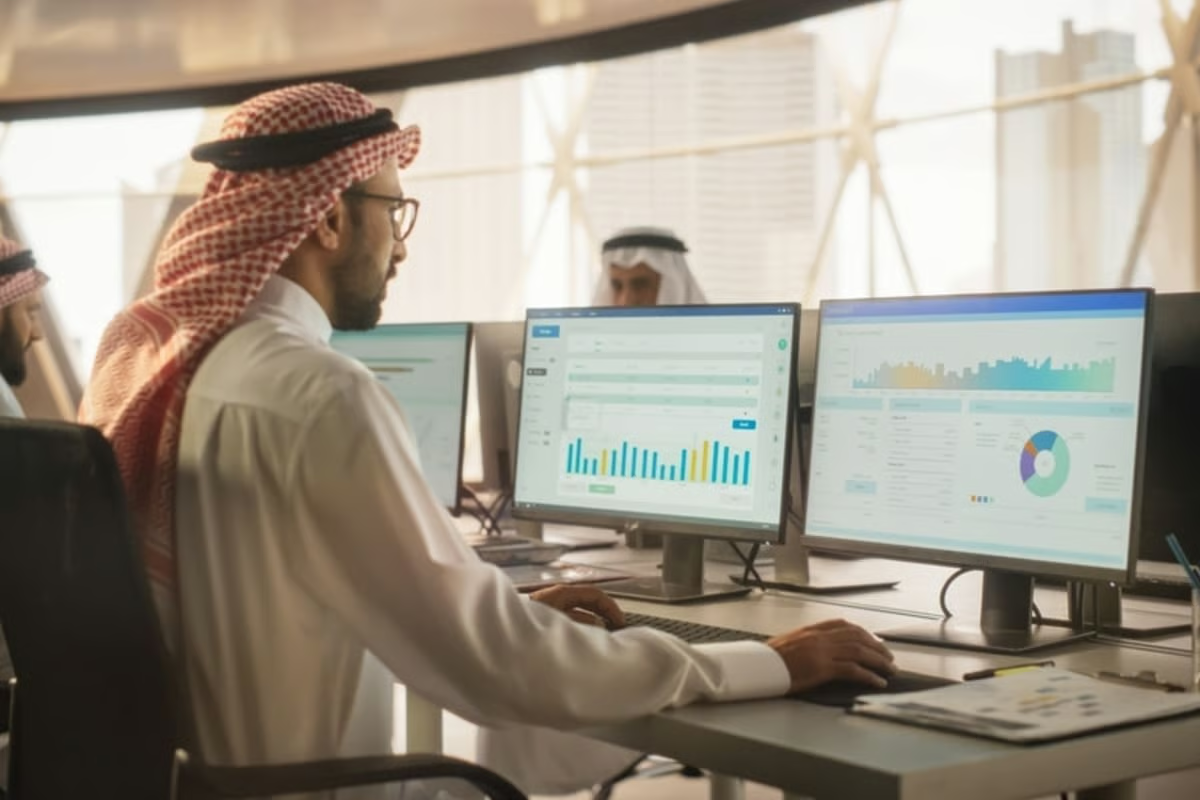

Business transformation strategy
Stakeholder engagement & communication planning
Different stakeholders need different messages at different times. A one-size communication plan is why most change programs lose people in the first 30 days.
We map your stakeholder landscape, design targeted engagement plans for each group, and build the communication calendar your teams need to keep everyone informed and on side throughout the transition.


Change impact analysis
Change adoption & sustainability programs

Digital change management
Why Our Change Management Consulting Gets Results
- Certified change practitioners with Prosci and internationally recognized methodologies
- Experience across large-scale government and private sector transformations in KSA
- We deliver strategy and execution together — you don’t get a plan and a handoff
- Arabic and English delivery — no translation gap between leadership and frontline teams
- 70+ clients, 100+ projects, 90% client satisfaction rate

Our Change Management Consulting Process
Assess
We start by understanding the change — its scope, its speed, and what it asks of your organization. Then we run a readiness assessment to find where resistance will come from before it arrives.
Design
We build the change strategy: stakeholder plan, communication roadmap, impact analysis, and training framework. Everything is sequenced to match your project timeline and your organization's actual capacity.
Execute
We run the engagement campaigns, deliver the training, and sit alongside your teams during the hardest parts of the transition. This isn't a hand-off. We stay in it with you.
Sustain
When the project closes, the change shouldn't revert. We embed new ways of working into performance systems, manager accountability, and operating routines so the organization stays changed.
70+ clients across KSA
100+ projects
90% client satisfaction
Government & private sector
Change is inevitable. Failure to manage it is not.
Frequently Asked Questions
A: Change management is the broader discipline of managing the people side of organizational change. Transformation management — the term Empower uses for its practice — refers specifically to managing large-scale, strategic organizational transformation: the kind of fundamental change in strategy, structure, culture, and operations that defines Vision 2030 programs. While all transformation requires change management, not all change management addresses the complexity and scale of institutional transformation. Empower's practice is designed for organizations navigating the latter.
A: ADKAR is Prosci's individual change model, describing the five outcomes a person must achieve for change to stick: Awareness (of the need for change), Desire (to participate), Knowledge (of how to change), Ability (to implement new skills), and Reinforcement (to sustain the change). Empower applies the ADKAR model to design targeted interventions at each stage — ensuring that change management activities address the real barriers people face, rather than relying on communication and training alone. ADKAR is the global gold standard for structured, measurable change management.
A: A Transformation Management Office (TMO) is a dedicated institutional function that governs the organization's transformation portfolio — coordinating change management activities, managing stakeholder engagement, tracking transformation readiness, and ensuring that initiatives achieve full adoption rather than just technical delivery. A PMO governs project delivery. A TMO governs the human side of transformation. In large programs, the two work in parallel: the PMO tracks scope, schedule, and budget while the TMO tracks readiness, adoption, and resistance. Empower designs and establishes both.
A: Research consistently shows that most large transformation programs fail not because of technical or structural problems, but because of people-related factors: inadequate sponsorship, poor communication, insufficient training, unmanaged resistance, and underestimated culture change. Empower addresses all of these through its Prosci-based methodology — assessing organizational readiness before transformation begins, building active sponsor coalitions, designing targeted communication and training programs, measuring ADKAR adoption levels continuously, and adjusting interventions based on real data rather than assumptions.
A: The duration of a transformation management engagement depends on the scale and complexity of the initiative being managed. A maturity assessment and methodology development engagement typically runs two to four months. A full TMO establishment engagement runs four to six months. Active management and execution support for a major transformation program may extend twelve to twenty-four months, depending on program scope. Empower designs each engagement to match the transformation timeline, ensuring that change management support is present from initiation through full adoption.
A: Yes. Empower provides qualified transformation management professionals who operate the TMO on an outsourced basis — managing the transformation portfolio, conducting stakeholder engagement, monitoring ADKAR adoption, and producing governance reporting. This service is designed for organizations that need professional TMO capability from day one of a major program, without waiting to recruit and develop a permanent internal team. Structured knowledge transfer ensures that by the end of the engagement, the organization has the internal capability to sustain transformation management independently.
Six Sigma: A Comprehensive Overview of the Five Levels of Excellence
Six Sigma: A Comprehensive Overview of the Five Levels of Excellence If you are looking
Continuous Improvement Is Not Optional: Tools and Methodologies to Boost Performance and Deliver Tangible Results
Continuous Improvement Is Not Optional: Tools and Methodologies to Boost Performance and Deliver Tangible Results
Six Sigma Journey in the Workplace: From Problem Diagnosis to Establishing a Culture of Quality
Six Sigma Journey in the Workplace: From Problem Diagnosis to Establishing a Culture of Quality
Get in Touch with Our Advisors
We help our clients identify key challenges and anticipate opportunities for growth and innovation through our management consulting services.