
Scrum Certification and Its Role in Driving Digital Projects and Organizational Transformation
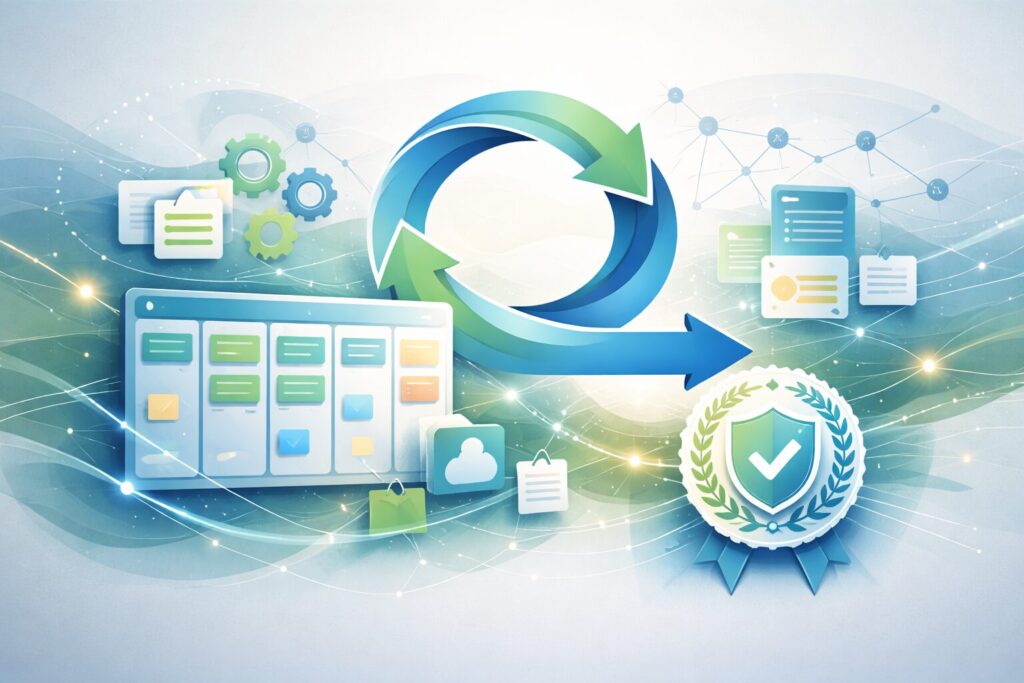
Scrum Certification and Its Role in Driving Digital Projects and Organizational Transformation
With Vision 2030 placing innovation and efficiency at the heart of its priorities, traditional project management methodologies are no longer sufficient to guarantee success. Agile methodologies have emerged as pivotal tools, with Scrum standing out as one of the most effective frameworks for managing complex digital projects and large-scale transformation initiatives.
Scrum certification is no longer just a training credential; it has become an entry point to building a more agile, collaborative, and adaptive organizational culture.
What is Scrum?
In today’s dynamic business landscape, where innovation accelerates and market demands shift continuously, Agile project management methodologies have become critical for success. Among them, Scrum holds a central place not merely as a project management tool, but as a comprehensive philosophy of work focused on collaboration, adaptability, and continuous improvement.
Scrum enables sustainable delivery and efficiency by breaking down work into short, iterative cycles known as Sprints. During each Sprint, a self-organizing team works towards a common goal, focusing on building system functionalities or features. This iterative and adaptive nature makes Scrum ideal for complex digital projects that demand rapid responses to change.
Scrum certification serves as proof of the skills and knowledge required to apply this framework effectively. It equips professionals with the ability to guide teams, remove obstacles, and improve processes directly contributing to higher efficiency, faster delivery cycles, and improved product quality.
Key Roles in Scrum
Scrum relies on three core roles, each playing a vital part in achieving project objectives:
1. Product Owner
The Product Owner is responsible for defining the product vision, managing the Product Backlog, and ensuring the team focuses on delivering the highest-value features for customers and stakeholders. They act as the customer’s voice within the team and ensure alignment between product development and business objectives.
2. Scrum Master
The Scrum Master serves as a servant-leader for the team, enabling them to work effectively within the Scrum framework by:
- Coaching and guiding the team on Scrum principles and practices.
- Removing any obstacles or blockers that might hinder progress.
- Facilitating key Scrum ceremonies (Sprint Planning, Daily Stand-ups, Sprint Reviews, and Retrospectives).
- Promoting a culture of collaboration, transparency, and continuous improvement.
3. Development Team
The Development Team is composed of professionals who build the product. They are self-organizing and cross-functional, meaning they collectively hold all the skills needed to deliver working increments without constant external direction.
The Role of Scrum Certification in Digital Project Success
Earning a Scrum certification particularly the Certified Scrum Master (CSM) empowers professionals to:
- Lead digital teams with efficiency.
- Strengthen collaboration among stakeholders.
- Remove organizational and technical roadblocks.
- Support a culture of continuous improvement.
These capabilities reduce project risks, enhance transparency, and accelerate delivery cycles, making Scrum certification a cornerstone of successful digital transformation initiatives.
Scrum and Organizational Transformation
The impact of Scrum extends far beyond software development. It is also a powerful enabler of enterprise-wide transformation.
Digital transformation involves not only adopting new technologies but also reshaping organizational culture, operations, and governance structures. Scrum’s iterative and flexible nature aligns seamlessly with transformation needs, supporting incremental change and reducing resistance.
Instead of implementing radical changes that may face pushback, Scrum enables a gradual change model allowing organizations to adapt progressively while seizing new opportunities.
Scrum as a Driver of Organizational Change
Scrum acts as a practical framework for managing change by:
- Facilitating acceptance of change: Teams actively engage in development, making transitions smoother.
- Building trust and transparency: Open reviews and sprint meetings create visibility.
- Enabling effective communication: Clear, continuous channels reduce misunderstandings.
- Focusing on tangible outcomes: Delivering testable value at the end of each Sprint.
- Encouraging continuous learning: Retrospectives foster ongoing improvement and adaptability.
This integration makes Scrum not only a project management framework but also a strategic tool for organizational change.
Empower and Scrum Certifications
At Empower, we view Scrum adoption not as theoretical training but as a core organizational capability. We provide internationally recognized certifications within our Capability Building Services, including:
- Certified Scrum Master (CSM)
- Certified Scrum Product Owner (CSPO)
- Certified Scrum Developer (CSD)
In addition, we support organizations through Portfolio, Program, and Project Management consulting using Agile methodologies, alongside Change Management consulting to ensure the success of transformation initiatives.
By combining individual certification with organizational enablement, Empower strengthens agility and competitiveness across entire enterprises.
Conclusion
Scrum certification is not just a credential it is an entryway to building a modern organizational culture rooted in agility, collaboration, and continuous improvement. With Empower’s certified training programs and consulting expertise in digital transformation, project management, and change management, organizations can turn Scrum from a theoretical framework into a practical capability that accelerates delivery, reduces risk, and guarantees successful transformation in today’s fast-moving digital era.